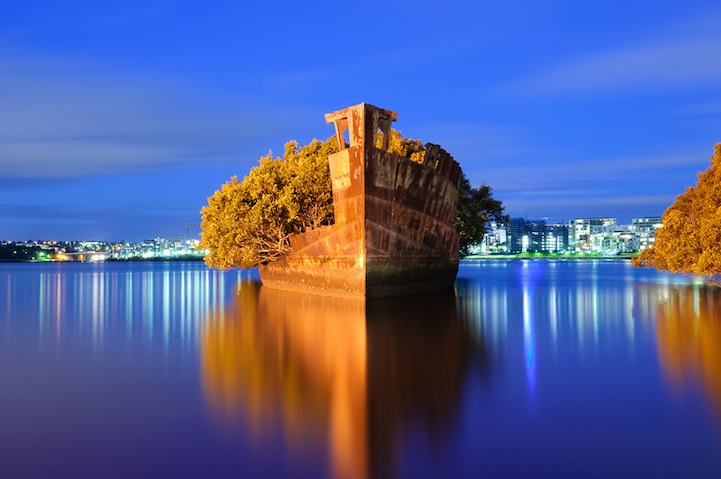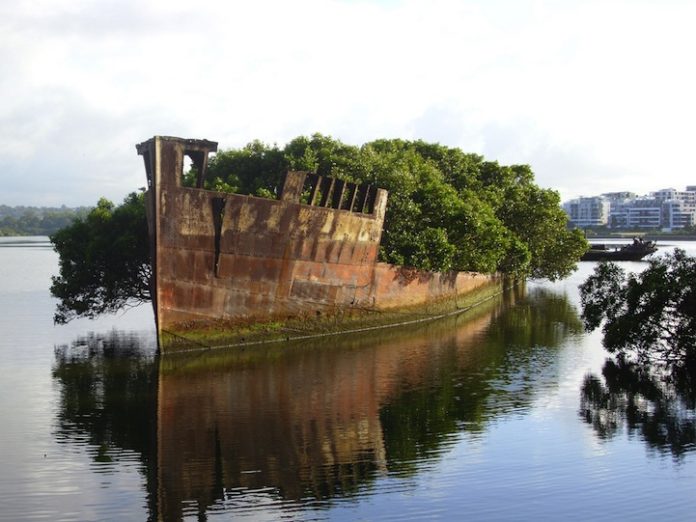
Though over a century has passed since its construction and the SS Ayrfield lies abandoned, its story is far from over. This vessel has transformed into a mesmerizing natural spectacle, aptly dubbed “The Floating Forest” due to the vibrant greenery enveloping its corroded structure.
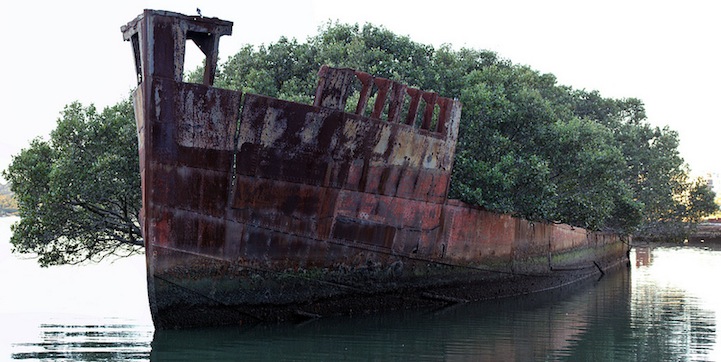
Crafted in the United Kingdom in 1911, initially as a steam collier, the SS Ayrfield’s journey is marked by versatility and historical significance. It played various roles, notably aiding in the transport of supplies for American forces during the Second World War.
After serving the seas for over six decades, its active duty concluded in 1972. The ship then found its final resting place at the ship-breaking yard in Homebush Bay, where it joined a collection of other retired ships destined to succumb to rust.
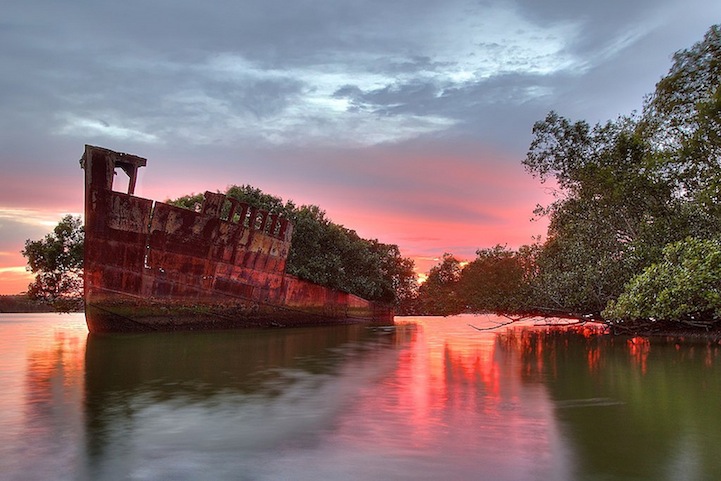
However, the fate of the SS Ayrfield took an extraordinary turn. Contrary to withering away into obscurity, it blossomed into a vibrant habitat. The ship’s decaying hull became the foundation for mangrove trees and a plethora of plant life, creating a unique and thriving ecosystem.
Now, more than a hundred years since it first set sail, the SS Ayrfield stands as a captivating relic, drawing global attention for its stunning transformation. Visitors flock to witness this remarkable interplay of nature and man-made structure, where life has emerged in the most unexpected of places.
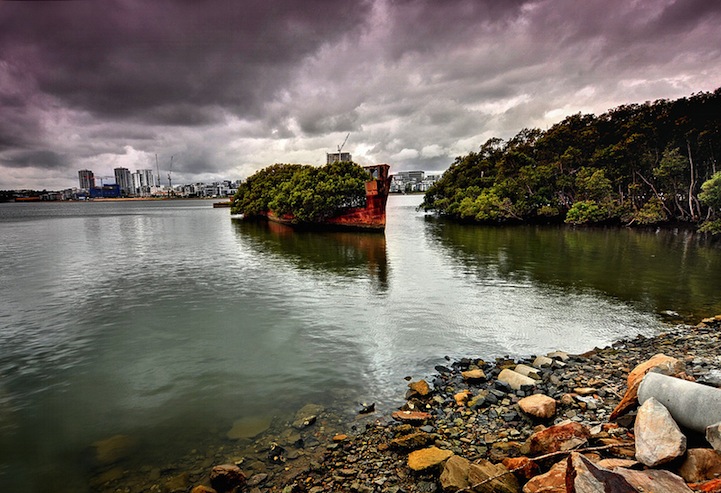
This remarkable metamorphosis of the SS Ayrfield serves as a poignant reminder of nature’s resilience and its ability to reclaim and beautify even the most forsaken of human creations.