
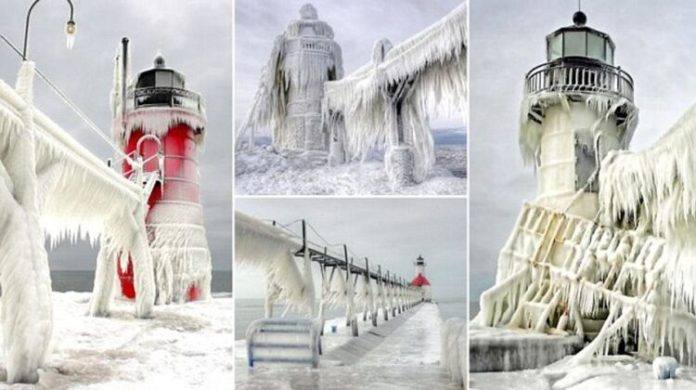
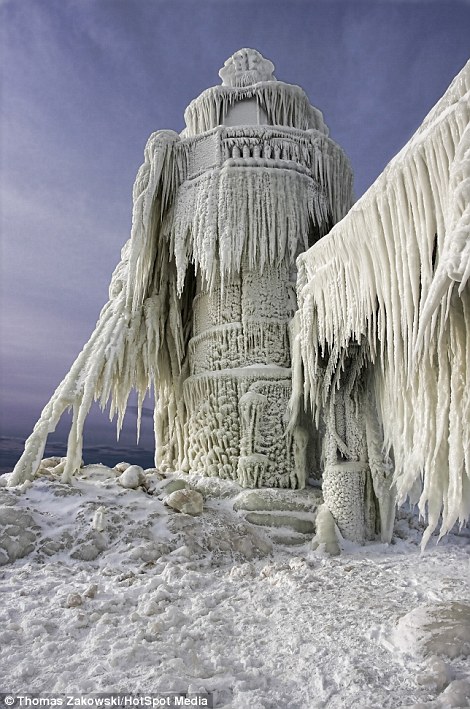
The frozen lighthouses in Michigan, eerily resembling a scene straight out of the apocalyptic film “The Day After Tomorrow,” stand as stunning, surreal monuments to nature’s power.
These 30-foot structures have been transformed into colossal icicles, enduring temperatures far below the freezing point. American photographer Thomas Zakowski, 56, captured these mesmerizing images during a visit to two Michigan cities following a severe storm that swept through the state. The lighthouses, particularly one in St. Joseph, Michigan, were encased in ice by the relentless waves during the fierce winter storm, creating a breathtaking spectacle of frozen beauty.
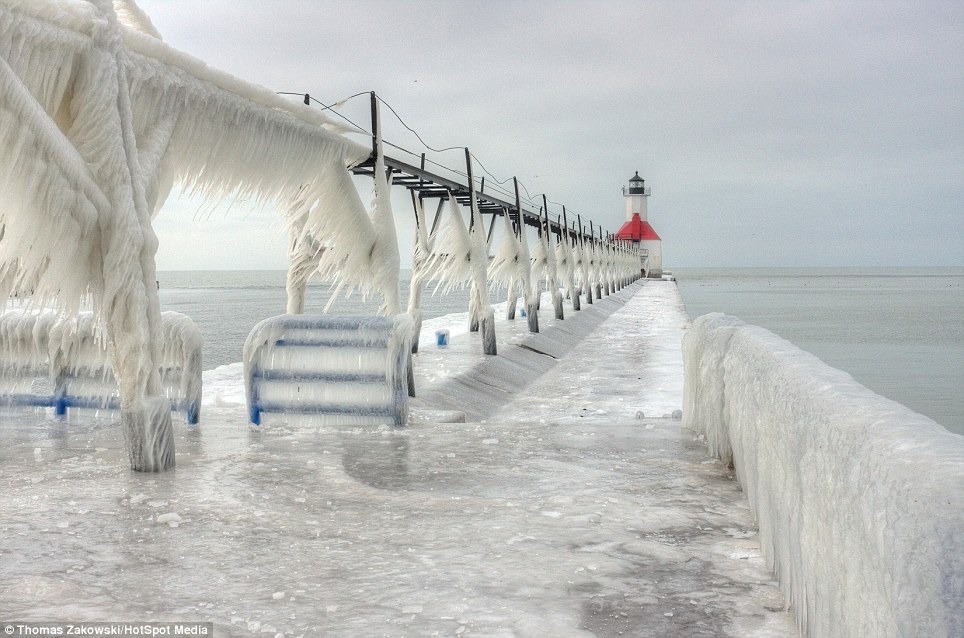
During the harshest of winters, these structures in St. Joseph can remain in this frozen state for over a month. Zakowski, hailing from South Bend, Indiana, described the extraordinary scene: “The waves that crashed against the pier froze the lighthouses solid. One of them, interestingly, had scaffolding anchors left behind from a painting job, which the storm lifted, creating a unique staircase-like appearance – a once-in-a-lifetime sight.”
Zakowski annually visits St. Joseph and South Haven in Michigan, following significant storms to document the aftermath. His commitment to capturing these moments reveals the transformative impact of extreme weather on these coastal structures.
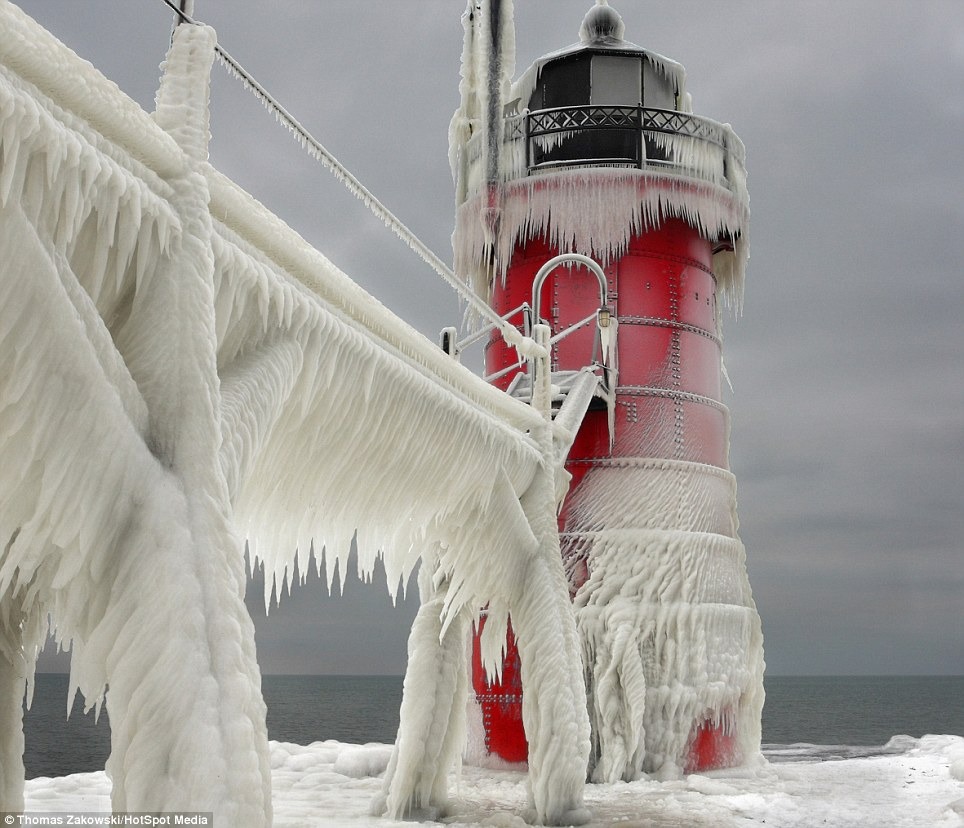
In St. Joseph, after a major storm, a lighthouse stands frozen in time, a testament to the harsh winter conditions. This phenomenon in Michigan is reminiscent of scenes from the chilling disaster movie “After the Next Day.” Zakowski’s photographs of the lighthouses in St. Joseph and South Haven encapsulate this extraordinary event.
He eagerly anticipates these yearly expeditions, stating, “The lighthouses can remain frozen for more than a month, depending on the weather. Each year is different, and I look forward to witnessing it. Reaching the site is challenging as it involves navigating the icy pier.”
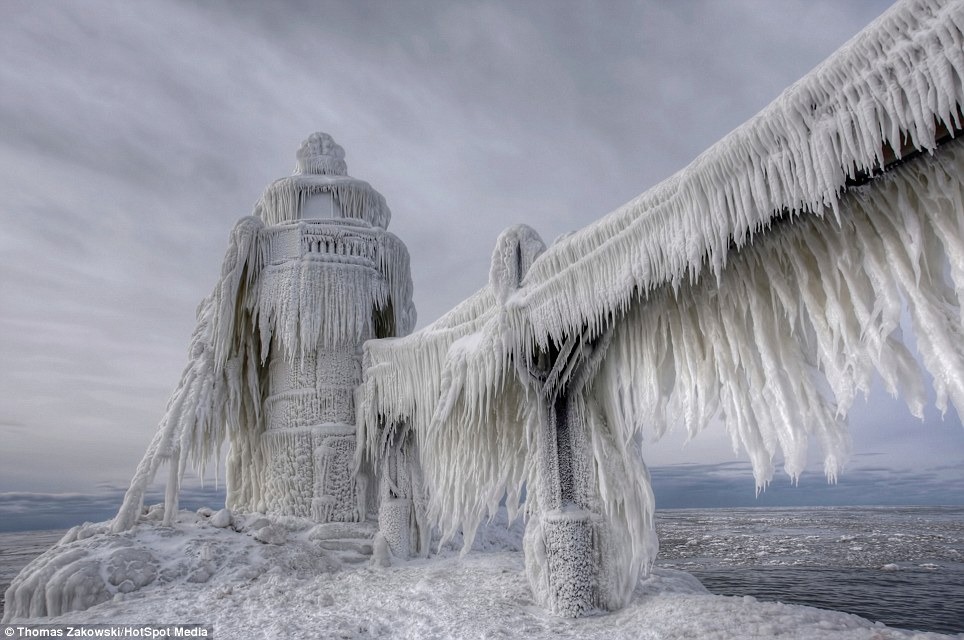
Zakowski emphasizes that while his photographs receive acclaim, his primary motivation is his fascination with this unique aspect of nature, not the accolades. He is driven by his interest in this extraordinary natural occurrence.
The phenomenon, a result of a “polar vortex,” has gripped more than half of the continental United States, plunging temperatures to their lowest in over two decades. As many as 140 million Americans brace for an exceptionally frigid start to the week, with some cities expecting temperatures to plummet between -30C and -50C.
Following another winter storm, these subzero temperatures have engulfed a vast portion of the Midwest. The storm brought over a foot of snow and fierce winds, significantly hindering travel and showcasing the relentless force of nature.